The construction industry has always been a key driver of economic growth and job creation, contributing significantly to the development of communities and societies around the world. However, the traditional methods of construction and cement production have been associated with negative environmental impacts, including high carbon emissions and depletion of natural resources. As a result, there has been a growing demand for sustainable and eco-friendly construction practices that not only address these issues but also create jobs and boost local economies.
Green cement, also known as sustainable cement, is a promising alternative to traditional Portland cement that addresses the environmental concerns associated with cement production. It is produced using recycled materials, waste products, and alternative raw materials, reducing carbon emissions and the depletion of natural resources. Additionally, it has similar properties to traditional cement, including strength and durability, making it an effective and viable solution for sustainable construction.
Beyond its environmental benefits, green cement also has significant economic advantages, particularly in terms of job creation and local economic growth. The production of green cement requires a skilled workforce, including engineers, chemists, and technicians, creating new job opportunities and promoting skills development. Furthermore, the use of green cement in construction projects can lead to cost savings in the long term, as the material has a longer lifespan and requires less maintenance than traditional cement. These savings can, in turn, support local economies by freeing up resources for other investments and projects.
Green Cement Production and Job Creation
Green cement, also known as sustainable cement, is a type of cement that is produced using recycled materials, waste products, and alternative raw materials. This sustainable alternative to traditional Portland cement not only helps to reduce carbon emissions and energy consumption, but also has the potential to create jobs and boost local economies.
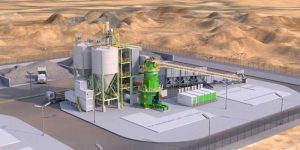
The production process of green cement involves skilled laborers such as engineers, chemists, and technicians. The raw materials used to produce green cement are ground and heated to produce clinker, which is then mixed with gypsum to create cement. The use of alternative raw materials such as fly ash, slag, and pozzolana helps to reduce the demand for virgin materials, leading to lower carbon emissions and energy consumption. The production process of green cement also requires less water than traditional cement, which is crucial in areas with limited water resources.
The green cement production industry has the potential to create jobs in various fields. There is a need for skilled workers in the production process, as well as job opportunities in research and development, marketing, and sales. The demand for sustainable construction practices is growing, and the green cement industry is expected to create new job opportunities and promote skills development in local communities.
Green cement production facilities have already been established in different parts of the world, and their impact on local economies has been remarkable. For instance, the Geocycle plant in Costa Rica uses waste materials from a nearby sugar cane processing plant to produce green cement, creating jobs in both the cement production and sugar cane industries. Similarly, the Green Island Cement Company in Hong Kong produces green cement using recycled materials, reducing the need for virgin materials and creating new job opportunities in the recycling industry.
Green Cement Applications in Construction and Economic Benefits
Green Cement is not only reduces carbon emissions and energy consumption, but also provides economic benefits to local communities.
One of the key properties of green cement is its durability, making it a suitable option for a range of construction applications. It can be used in both residential and commercial construction, including buildings, roads, and bridges. Additionally, green cement can be used in conjunction with other sustainable building materials to create structures that are not only environmentally friendly, but also cost-effective.
The use of green cement in construction projects can also provide significant economic benefits to local communities. By using locally sourced recycled materials and waste products in the production of green cement, transportation costs can be reduced and local businesses can be supported. Green cement production facilities can also create new job opportunities, providing employment and skills development in the local area.
One example of a successful green cement project is the construction of the San Francisco Public Utilities Commission headquarters. The building used over 20,000 tons of recycled concrete, including green cement, which reduced carbon emissions by 42,000 tons. The use of green cement also supported the local economy, as the recycled content was sourced from a nearby recycling plant.
Another example is the use of green cement in the construction of a bridge in Kerala, India. The bridge used a combination of traditional cement and green cement made from industrial waste, reducing carbon emissions by 60%. The use of green cement in this project also supported the local economy, as the waste material used to produce the cement was sourced from nearby factories.
Government Policies in indonesia and Incentives for Green Cement Industry
Governments around the world are taking steps to promote the use of green cement, which has the potential to revolutionize the construction industry while creating new job opportunities and boosting local economies. This article will provide an overview of the government policies and incentives supporting the green cement industry in Indonesia, and their impact on job creation and economic growth.
Government Policies and Incentives in Indonesia:
The Indonesian government has recognized the importance of promoting sustainable construction practices and has taken several steps to support the green cement industry. In 2019, the Ministry of Industry issued a regulation that requires cement companies to reduce their carbon emissions by 30% by 2030. This regulation has encouraged cement companies to invest in research and development of green cement technologies, and to adopt sustainable production methods.
To further support the growth of the green cement industry, the Indonesian government offers various incentives such as tax breaks, reduced import duties on green cement equipment, and funding for research and development. The government has also launched the Indonesia Climate Change Trust Fund (ICCTF), which provides financial support for projects that promote sustainable development, including green cement production.
Impact on Job Creation and Economic Growth
The green cement industry has the potential to create new job opportunities and boost local economies. Green cement production requires skilled labor, such as engineers and technicians, who are involved in the research, development, and production of sustainable cement. The increased demand for green cement has also led to the development of new supply chains and distribution networks, creating additional job opportunities in transportation, logistics, and marketing.
In addition to job creation, the green cement industry has the potential to generate economic growth through increased investment and exports. Green cement production can help reduce Indonesia’s dependence on imported cement, which can lead to significant cost savings and increase the country’s competitiveness in the global market.
Examples of Government Initiatives:
One example of a government initiative supporting the growth of the green cement industry in Indonesia is the Low Carbon Development Initiative (LCDI). This initiative was launched by the Ministry of Energy and Mineral Resources in 2018, with the aim of reducing greenhouse gas emissions and promoting sustainable development. The LCDI provides funding and technical support for projects that promote low-carbon development, including the production of green cement.
Another example is the National Energy Efficiency and Conservation Action Plan (NEECA). This plan was launched by the Indonesian government in 2015, with the aim of reducing the country’s energy consumption and promoting the use of renewable energy sources. The plan includes measures to support the development of energy-efficient technologies, including green cement production.
Conclusion
In conclusion, green cement is not only an environmentally sustainable alternative to traditional cement but also a major contributor to job creation and economic growth in the construction industry. The production of green cement requires a significant amount of labor, which can lead to the creation of new jobs, particularly in developing countries like Indonesia.
Additionally, the economic benefits of using green cement in construction projects, such as reduced maintenance costs and lower energy consumption, can have a positive impact on local economies. Governments can play a crucial role in supporting the growth of the green cement industry through policies and incentives that promote sustainable construction practices and encourage investment in green cement production facilities.
As the demand for sustainable construction materials continues to grow, it is clear that green cement will play an increasingly important role in creating a more sustainable and prosperous future for local communities and the environment.
References:
“Green Cement Production – potential for job creation” by International Labour Organization (ILO)
“The Benefits of Using Green Cement” by Environmental Science & Engineering Magazine.
Green Cement: Eco-Friendly Cement for Sustainable Development” by Dr. Sandeep Gaikwad in International Journal of Recent Technology and Engineering (IJRTE)
Indonesian Cement Association (2021), Green Cement
Indonesia Investment Coordinating Board (2021), Indonesia’s Investment Policies.
Ministry of Energy and Mineral Resources of the Republic of Indonesia. (2021). Regulation of the Minister of Energy and Mineral Resources No. 13 of 2021.