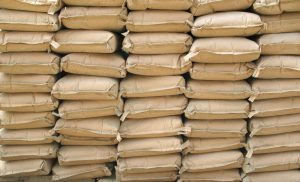
Cement is a powerful binding agent or adhesive that is the main component of concrete. Concrete is a fundamental component in construction, serving as a crucial component in foundations, constructions, roads, bridges, highways, embankments, and other structures. Cement production levels continue to climb year after year, owing to its critical role in construction and urban development. Ordinary Portland Cement (OPC) production levels are currently at 3.6 billion metric tonnes per year. According to the Earth Institute at Columbia University, the yearly growth rate of cement output is 2.5%. According to current research, the cement production business generates around 2.55 billion tonnes each year. The cement yield is expected to exceed 4.5 million tonnes by 2050.
As vital as cement is, the manufacturing process is a major source of industrial air pollution. The manufacturing of clinker, a crucial element in cement, is a major source of noxious gas emissions, particularly carbon dioxide.
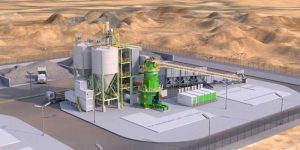
A mixture of limestone and clayey materials is put into a 14000C kiln during the cement making process. Following the thermal process, the treated material is pulverised, resulting in clinker, a lumpy and solid substance. Finally, gypsum and clinker are combined to produce cement. Clinker manufacturing is an energy-intensive process that produces gaseous effluents. For every tonne of cement produced, 0.6 to 1 tonne of CO2 is released. In addition to clinker production, various activities in cement manufacturing emit CO2. However, cement is so essential in all aspects of life that it is difficult to envision a world without it. Is there a different alternative to cement?
Green Cement: A Sustainable Solution for Emission Reduction
As part of an attempt to reduce the hazards posed by emissions, the cement manufacturing process can be modified to drastically reduce emission levels. Green cement is a type of cement that is made using a “carbon-negative manufacturing process.” In other terms, green cement is cement generated as the end result of a technologically sophisticated process that minimises emissions during unit activities (such as clinker production). Green cement is an environmentally friendly product that addresses severe environmental challenges while reducing the carbon footprint of cement manufacture.
The prefix green preceding green cement implies anything environmentally friendly or that contributes to greening the environment. All nations are becoming more aware of the need of green cement as a result of worldwide symposiums promoting awareness about sustainability and climate change. Various manufacturing organisations have patented various green cement manufacturing systems and procedures.
Anything that is environmentally friendly or helps to make the environment greener is denoted by the term green preceding green cement. All countries are gradually realising the importance of green cement as a result of worldwide symposiums that raise awareness of sustainability and climate change. For the production of green cement, numerous processes and technologies have been patented by various production companies.
The American cement maker Ceratech is one multinational business that has successfully launched the promising idea and established standards in the global market. 95 percent recycled fly ash and 5 percent liquid additives from renewable sources make up the feed mixture used in its manufacturing process. The hydraulic cement system that was used conforms with strict technical requirements set forth by the International Code Council (ICC) and the United States Green Building Council (USGBC). The environmental product declaration (EPD) requirements state that Ceratech’s cement production leaves nearly no carbon footprint. The procedure cuts water usage in half while consuming virgin resources at a 95% reduction.